
A Nil Encumbrance Certificate (EC) is an official document issued by the Sub-Registrar’s Office (SRO) that certifies a property has no registered transactions such as sale, mortgage, lease, or gift during a specified period.
This certificate, issued in Form 16, serves as crucial proof of a property’s clear and marketable title for the duration requested by the applicant.
EXAMPLE OF A NIL ENCUMBRANCE CERTIFICATE
Let’s consider an example for better understanding:
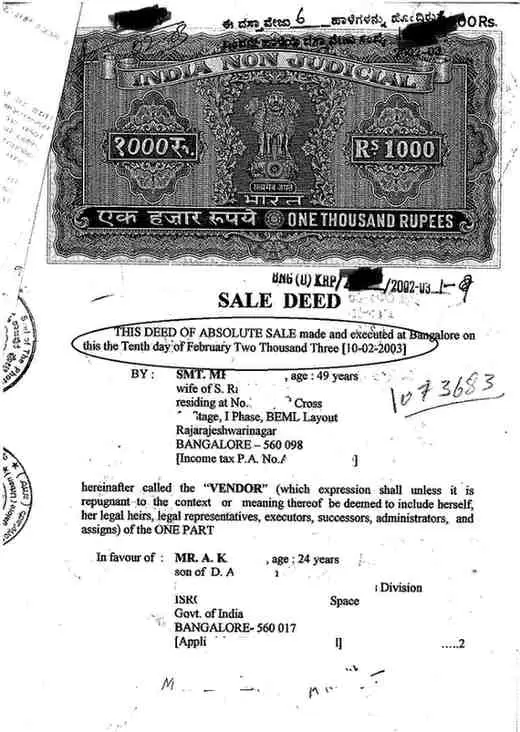
- A property was registered on 10-02-2003.
- Since then, no further transactions or mortgages have been recorded against the property.
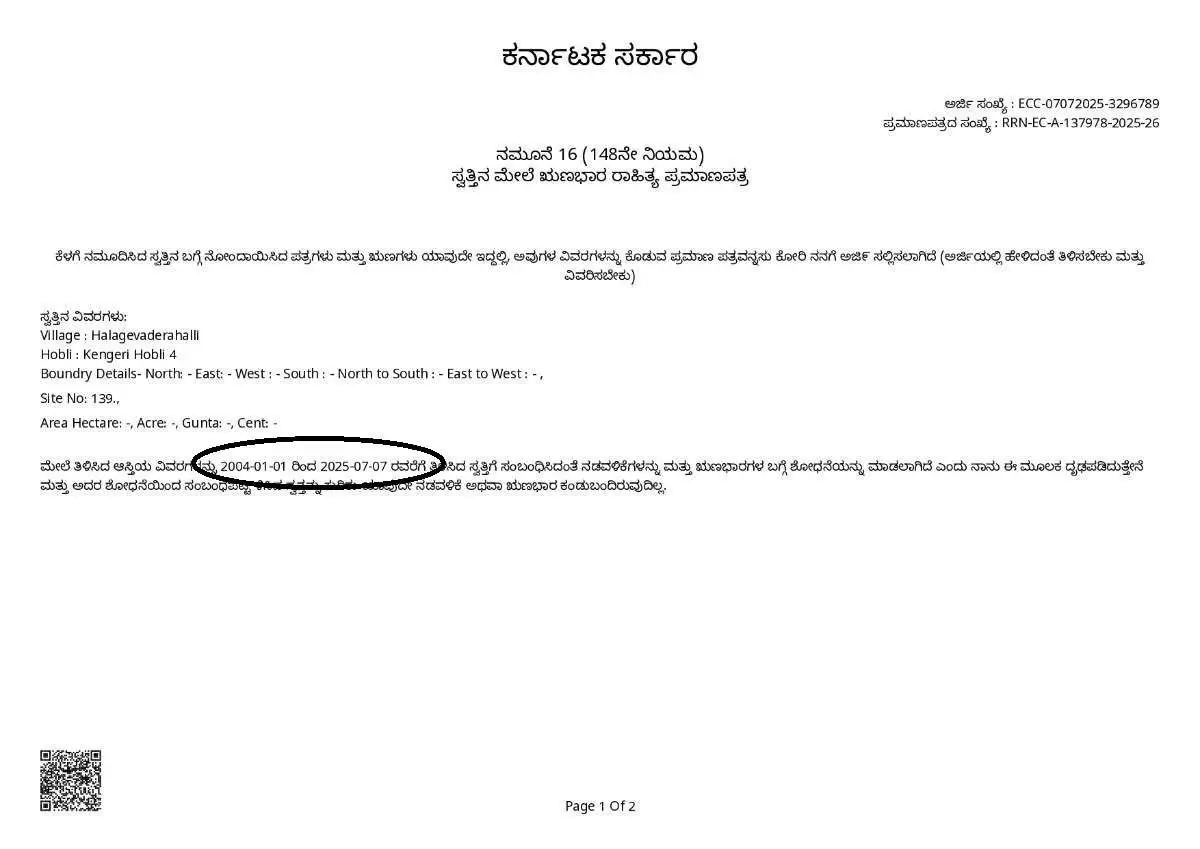
If you apply for an Encumbrance Certificate (EC) for the period 2004 to the present, the Sub-Registrar’s Office will issue a Form 16 Nil Encumbrance Certificate confirming that no encumbrances or dealings have taken place on the property during that period.
[Sale Deed highlighting the 2003 registration date]
[Nil Encumbrance Certificate with the encircled time duration]
WHAT IS FORM 16?
Form 16 is the prescribed format used to issue a Nil Encumbrance Certificate. It clearly states that there are no registered encumbrances on the property for the requested time period.
This form is particularly important in the following situations:
- Property Purchase: Buyers verify the seller’s title.
- Loan Applications: Banks confirm that the property is free of prior claims.
- Legal Verification: Lawyers and authorities establish ownership clarity.
Thus, Form 16 serves as a safeguard for both buyers and lenders by confirming that the property title is free from disputes or financial liabilities during the stated timeframe.
WHY IS A NIL ENCUMBRANCE CERTIFICATE IMPORTANT?
- Ensures clear ownership: Confirms no legal or financial claims.
- Protects buyers: Reduces risk of hidden liabilities.
- Mandatory for banks: Required for home loan sanction.
- Supports resale transactions: Helps during future property sales.
FREQUENTLY ASKED QUESTIONS (FAQS)
1. What is the difference between Form 15 and Form 16 in Encumbrance Certificates?
- Form 15 EC: Issued when there are registered transactions (sale, mortgage, lease, etc.) during the requested period.
- Form 16 EC: Issued when there are no registered transactions during the requested period (Nil Encumbrance).
2. How do I apply for a Nil Encumbrance Certificate in Karnataka?
You can apply online through the Kaveri Online Services portal. After selecting the period for which the EC is required, the system will generate either Form 15 or Form 16 depending on the records.
3. Is a Nil Encumbrance Certificate proof of absolute ownership?
No. A Nil EC only confirms the absence of registered transactions during the chosen timeframe. It does not account for:
- Unregistered agreements (like GPA, unregistered sale, tenancy agreements)
- Pending court cases or legal disputes
- Government acquisitions or claims
Hence, it should be used along with other title verification methods.
4. What is the validity of a Nil Encumbrance Certificate?
There is no fixed validity period for an EC. Banks, buyers, or authorities may request the latest EC depending on the purpose.
5. Is a Nil EC mandatory for home loans?
Yes. Banks typically insist on a Nil Encumbrance Certificate (Form 16) when the property has no prior dealings, to ensure it is free from financial liabilities.
NEED PROFESSIONAL ASSISTANCE?
Obtaining an Encumbrance Certificate can sometimes be time-consuming. We provide professional support in securing Encumbrance Certificates (EC), including Nil EC (Form 16), for your properties.
- Email: pgnproperties@gmail.com
- WhatsApp: +91 97424 79020