
Verifying whether a property is officially registered is an essential step in property transaction. A registered property ensures legal ownership and helps avoid disputes in the future. The simplest and most reliable way to confirm registration is by checking the Encumbrance Certificate (EC).
STEP 1: VERIFY DETAILS IN THE REGISTERED SALE DEED
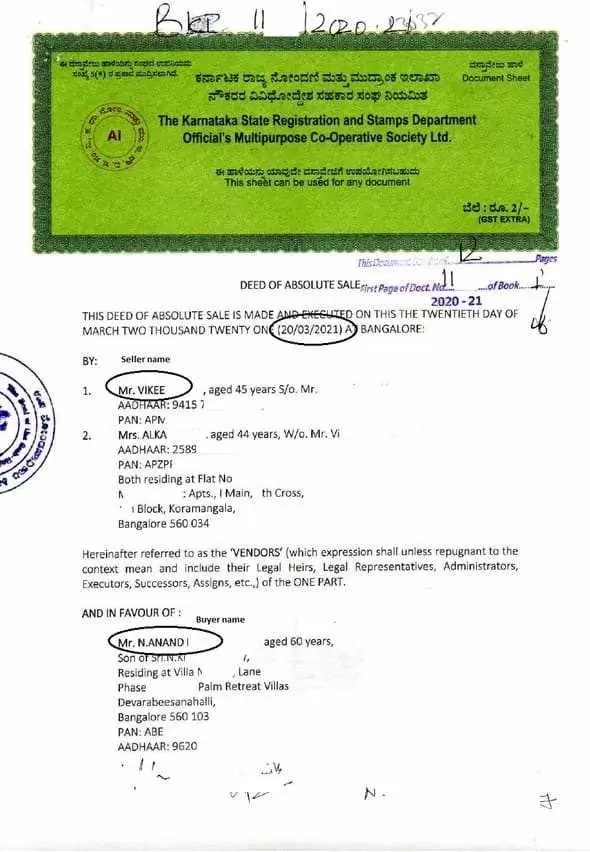
A registered sale deed serves as the primary proof of ownership. It contains vital details such as:
- Date of Registration
- Seller’s Name
- Buyer’s Name
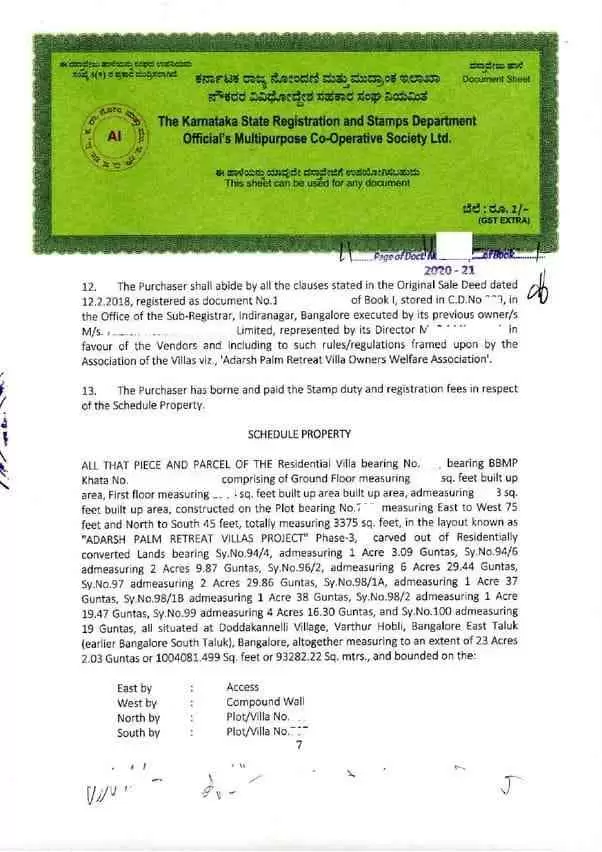
- Property Schedule
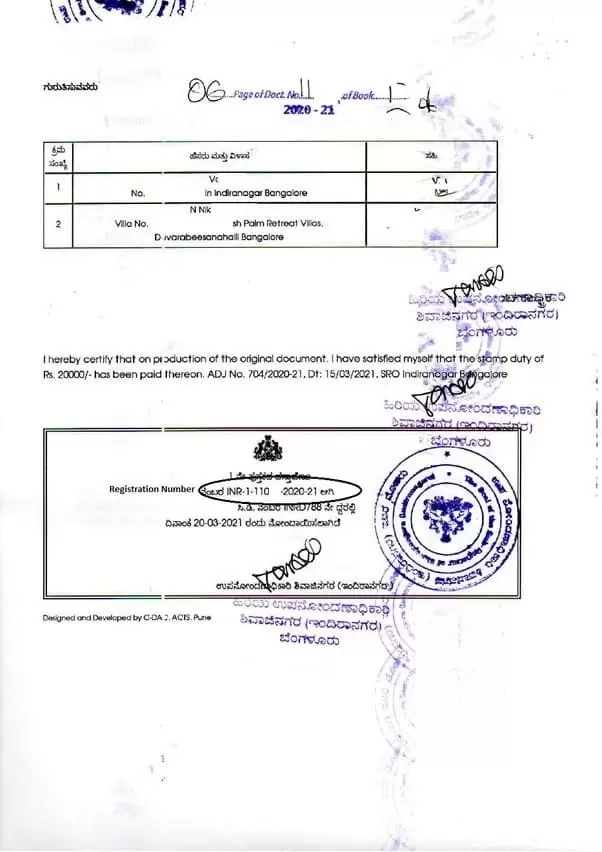
- Registration Number
Below are examples of key pages in a registered sale deed:
- Front Page: The encircled sections in the image show the date of registration, seller’s name, and buyer’s name.
- Subsequent Page: Displays the registration number issued by the Sub-Registrar’s Office.
- Property Schedule Page: Specifies the exact details and boundaries of the property.
STEP 2: CROSS-VERIFY USING THE ENCUMBRANCE CERTIFICATE (EC)
Once you have the registered sale deed, the next step is to confirm the registration details through the Encumbrance Certificate (EC). This certificate records all transactions registered for a property.
When you extract the EC online, ensure the following details match your sale deed:
- Column 3 – Date of Registration:
Should match the registration date mentioned in the sale deed.
Example: The sale deed dated 20th March 2021 shows the same date in the EC. - Column 5 – Seller’s Name:
Should correspond with the seller’s name in the sale deed.
Example: The seller Mr. VIKEE in the sale deed appears under Column 5 of the EC. - Column 6 – Buyer’s Name:
Should correspond with the buyer’s name in the sale deed.
Example: The buyer Mr. ANAND in the sale deed is listed under Column 6 of the EC. - Column 9 – Registration Number:
The registration number in the sale deed should exactly match the one in the EC.
Refer to EC below:
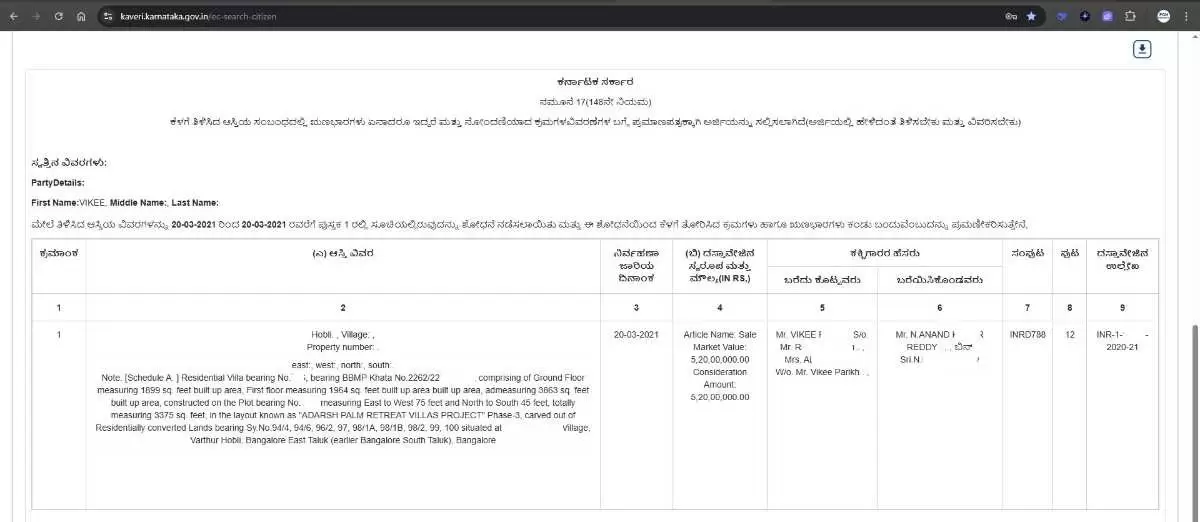
If all these details match, it confirms that the property is duly registered. If the property is not registered, no transaction details will appear in the EC.
STEP 3: OBTAIN THE EC ONLINE IN KARNATAKA
In Karnataka, the Encumbrance Certificate can be easily obtained through the Kaveri Online Services portal.
The process is simple, and the cost is usually around Rs.50 – 250.
Steps:
- Visit the Kaveri Online Services website.
- Register or log in to your account.
- Select ‘Encumbrance Certificate’ under services.
- Enter the property details
- Pay the required fee and download the EC in PDF format.
NEED ASSISTANCE?
We assist in extracting Encumbrance Certificates (ECs), whether or not you have the sale deed available.
To avail our service, contact:
- pgnproperties@gmail.com
- WhatsApp: +91 – 97424 79020
FREQUENTLY ASKED QUESTIONS (FAQ)
- How can I confirm if a property is registered in Karnataka?
You can confirm property registration by checking the transaction details in the Encumbrance Certificate (EC), which can be downloaded from Kaveri Online Services. The EC lists all registered transactions related to the property.
- What is an Encumbrance Certificate (EC)?
An Encumbrance Certificate is an official record maintained by the Sub-Registrar’s Office showing all transactions registered on a property. It helps verify ownership and ensures the property is free from any registered loans or encumbrances.
- What if the property details do not appear in the EC?
If the transaction details are not reflected in the EC, it indicates that the sale deed has not been registered with the Sub-Registrar’s Office or that the property may have unregistered or informal ownership documentation.
- Can I apply for an Encumbrance Certificate without the sale deed?
Yes. You can apply for an EC using either the property details (like survey number, site number, or address) or the document number if available.
- How much does it cost to obtain an EC online in Karnataka?
The total cost to apply for an Encumbrance Certificate online through Kaveri Online Services is typically around Rs. 50 to 250, depends on the number of years of EC
- How long does it take to get an EC online?
Once the application is submitted, the EC is generally available for download within 2 to 3 working days, depending on the property jurisdiction and server response time.
- Why is it important to verify property registration before purchase?
Verifying property registration ensures that the ownership is legally valid and that no fraudulent or duplicate sale has occurred. It safeguards buyers from future disputes and legal complications.
- Can you assist in extracting the Encumbrance Certificate?
Yes. We assist in extracting ECs with or without the sale deed. You can reach us via email at pgnproperties@gmail.com or WhatsApp at +91 – 97424 79020.